
In this article
Build a simple plan of needs, dependencies, alternatives and contacts for a disruption that lasts.
An approach adapted to the home
Business continuity helps organizations maintain their important functions. A home can take up this logic without using a standard as a domestic obligation: what needs should be preserved and what do they depend on?
The emergency plan organizes the immediate actions. The Continuity Plan also looks at the following days: salaries, food, housing, communications, income and family responsibilities. Both must complement each other.
Step 1: Identify needs and people
List the essential needs and the people involved. A medical dependence, an infant or a need for mobility can change priorities. Seek professional advice when the continuity of a treatment or device is at stake.
Specify what can wait and what cannot be interrupted without risk. The deadlines must come from the situation and competent advice, not from a universal duration assigned to each household.
Step 2: Identify Dependencies
For each need, write down the necessary services, people, equipment and information. A pump depends on the current; a renewal of treatment also depends on contacts and an accessible pharmacy.
Find out what depends on one way. Ask what would happen if the person who knows everything was absent or if the usual phone no longer worked. This step can bring out organizational solutions before purchases.
Step 3: Prepare alternatives and help
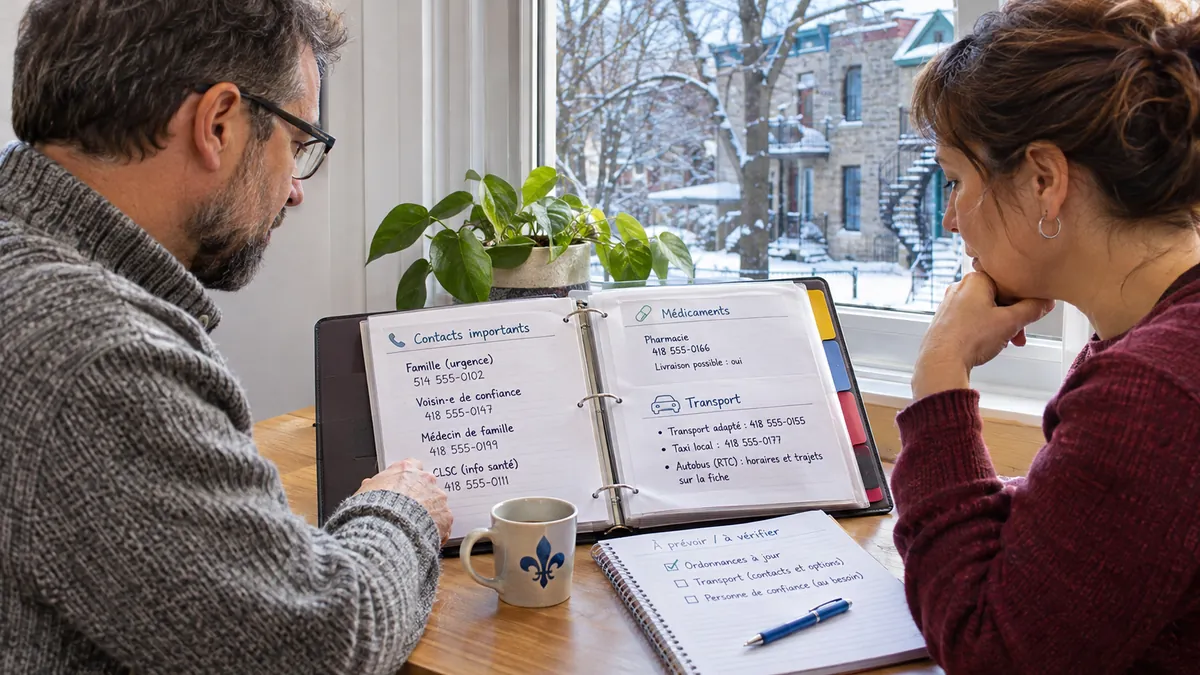
Choose realistic solutions: adapted reservations, authorized equipment, written contacts and possible hosting. Check availability, access and terms of use. An auxiliary heating, a connection or a treatment is not improvised.
Define who follows each action and who can take it back. Include animals and transportation constraints. Caregivers and municipal services are among the possibilities for help; they should not be assumed to be available without verification.
Step 4: Check and maintain
A paper exercise allows you to change a hypothesis and see if the need can still be covered. Don’t actually cut out an essential service to test the plan. Note the blocked points and a concrete correction.
Keep a version accessible and protected, and then update it after important changes. The plan must remain brief and usable by the people concerned, without relying on software or a single person.
The limit that must remain visible
Continuity does not mean staying at home at all costs. A departure order or dangerous accommodation requires a change of solution. Reserves support security; they do not replace evacuation, care or public services.
After an event, check the recovery needs and take stock when people can participate. The plan improves from the difficulties observed, without looking for a culprit.
Sources and Updates
Documentary verification: November 3, 2026.