
In this article
Learn useful lessons from floods without transferring a foreign assessment to your neighbourhood: water, access, documents and departure.
Understand the risk and its consequences
An international event classification helps coordinate humanitarian follow-up. It does not replace a local alert or a home safety assessment. An incomplete initial assessment does not mean that no consequences will appear afterwards.
For a home in Quebec, the concrete issues are access to services, the availability of water and the possibility of leaving a home that has become dangerous. Prepare these needs based on your municipality’s information and current maps.
Key lessons for households and communities
Lesson 1: Flooding comes quickly
A flood can start and intensify within a few hours. In Quebec, spring floods and torrential rains are very real risks. Responsiveness to weather alerts can make a difference.
Lesson 2: Even “spared” regions need to prepare
A green alert does not mean there is no risk for the future. Areas with a low claim history can be affected during exceptional weather events. Preparation must be universal.
Lesson 3: Invisible Impacts Matter Too
Even in the absence of immediate deaths, flooding damages roads, water systems and electricity, and isolates communities. Minimal self-sufficiency (water, food, medicine) becomes crucial during service interruptions.
Remember: a low initial balance sheet does not allow to ignore interrupted services. Prepare people, documents and alternatives before a water surge.
Reflexes to adopt
- Sign up for Environment and Climate Change Canada (ECCC) alerts to receive real-time weather warnings.
- Identify areas at risk of flooding in your area via city or municipality maps and plan an evacuation route.
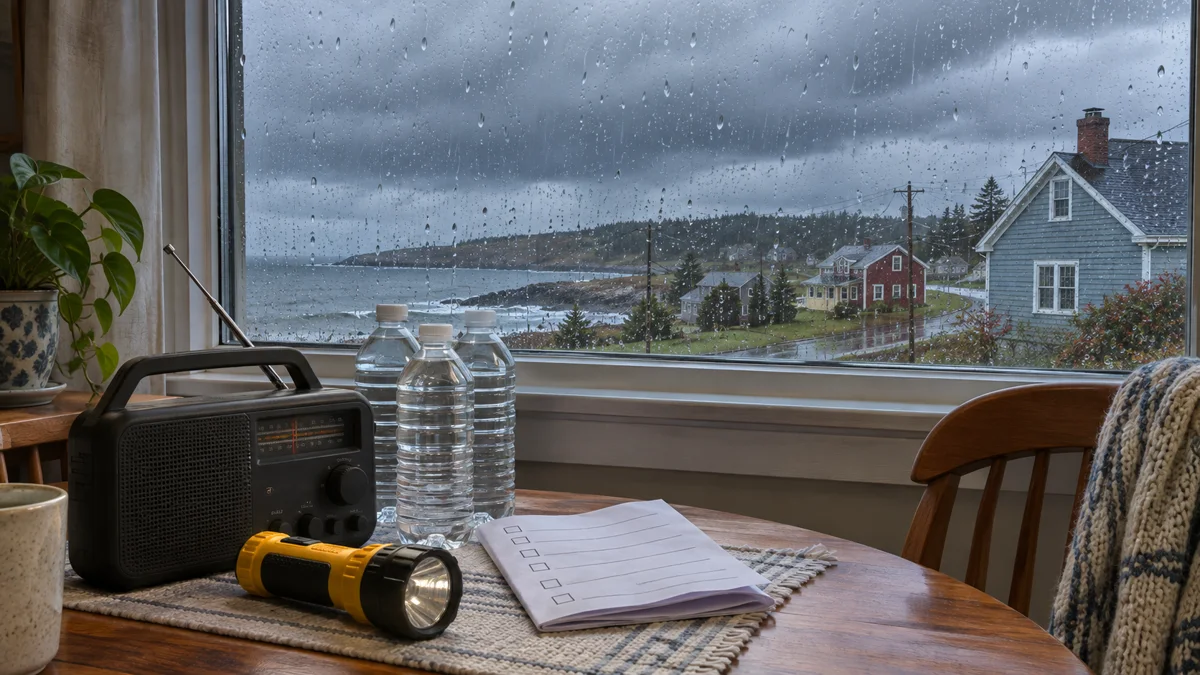
- Provide a kit for at least 72 hours and a suitable water supply: 6 liters per person to drink, plus 6 liters for food and hygiene over three days, not to mention the animals. Identify a refueling solution if the disruption continues.
- Document and store in a safe place (watertight container, digital copy) important documents: title, proof of insurance, identity papers.
- Check regularly that home insurance covers water damage related to floods, as this coverage is not automatic in Quebec.
Prepare now
Concrete actions:
- Contact the Canadian Red Cross for first aid and disaster resilience training.
- Make a photo/video inventory of your property and store this evidence in the cloud or at a third party (useful for insurance claims).
- Establish an emergency family plan: meeting point, emergency contacts, everyone’s roles.
- Regularly test and renew your emergency kit (every 6 months or after use).
Frequently asked questions
How do I know if my property is at risk of flooding?
Check the official flood zone property search and ask your municipality or MRC which map and rules apply. The maps evolve; their absence does not eliminate all the risks of water damage.
Does my home insurance cover flooding?
Coverage depends on the cause of the damage and the protections of the contract. Specify endorsements, ceilings, deductibles and exclusions for overflow, push-back and infiltration. Do not assume the same blanket coverage or exclusion for all contracts.
How long do I need to store emergency food and water?
Respect the conditions of storage and the indications of the container or manufacturer. Check the condition of the bottles, labeling and rotation. The duration is not deduced from the hermetic nature of the container.
Events on the other side of the world teach us that no region is truly immune to natural disasters. It is by acting now, before the crisis, that we protect our loved ones and our property. Prevention is not an option, it is a shared responsibility.
Sources and Updates
Document verification: November 3, 2026. The official instructions in force in your area take precedence in real situations.