
In this article
In an emergency situation, useful information must allow a decision adapted to the place and the time. The volume of messages does not guarantee their quality. Organize a few reliable sources, distinguish observations from assumptions, and convey only what really helps the people involved.
Selecting sources before the incident
Identify your municipality’s canals, emergency services and essential suppliers. Depending on the risk, add the agencies responsible for the territory, health or road conditions. Check how to receive their reviews and where to find an update.
The media can provide context and report on events. For instructions that concern you directly, also seek the communication of the competent authority. A general analysis does not replace the notice applicable to your address.
Use a short verification grid
| Marker | Question to ask |
|---|---|
| Origin | Who actually posted the message? |
| Date | Is the information still current? |
| Territory | Does it concern your sector? |
| Status | Is it an observation, an assumption, or an instruction? |
| Action | What to do and who to check with? |
A screenshot may have lost its date or context. A spectacular video can come from another event. Return to the original document when possible. If information is corrected, also relay the correction to the people to whom you have transmitted it.
Observe without monitoring people
You can report a visible hazard from a safe location: smoke, cable on the ground, or flooded road. Give the location and the observed facts. Don’t approach a dangerous infrastructure, building or perimeter to collect more images.
Unusual behavior does not prove malicious intent. Avoid neighbor lists, spinning, and broadcast photos to have a person identified without proper reason. In case of danger, contact the relevant services rather than launching a public inquiry.
Provide several means of reception
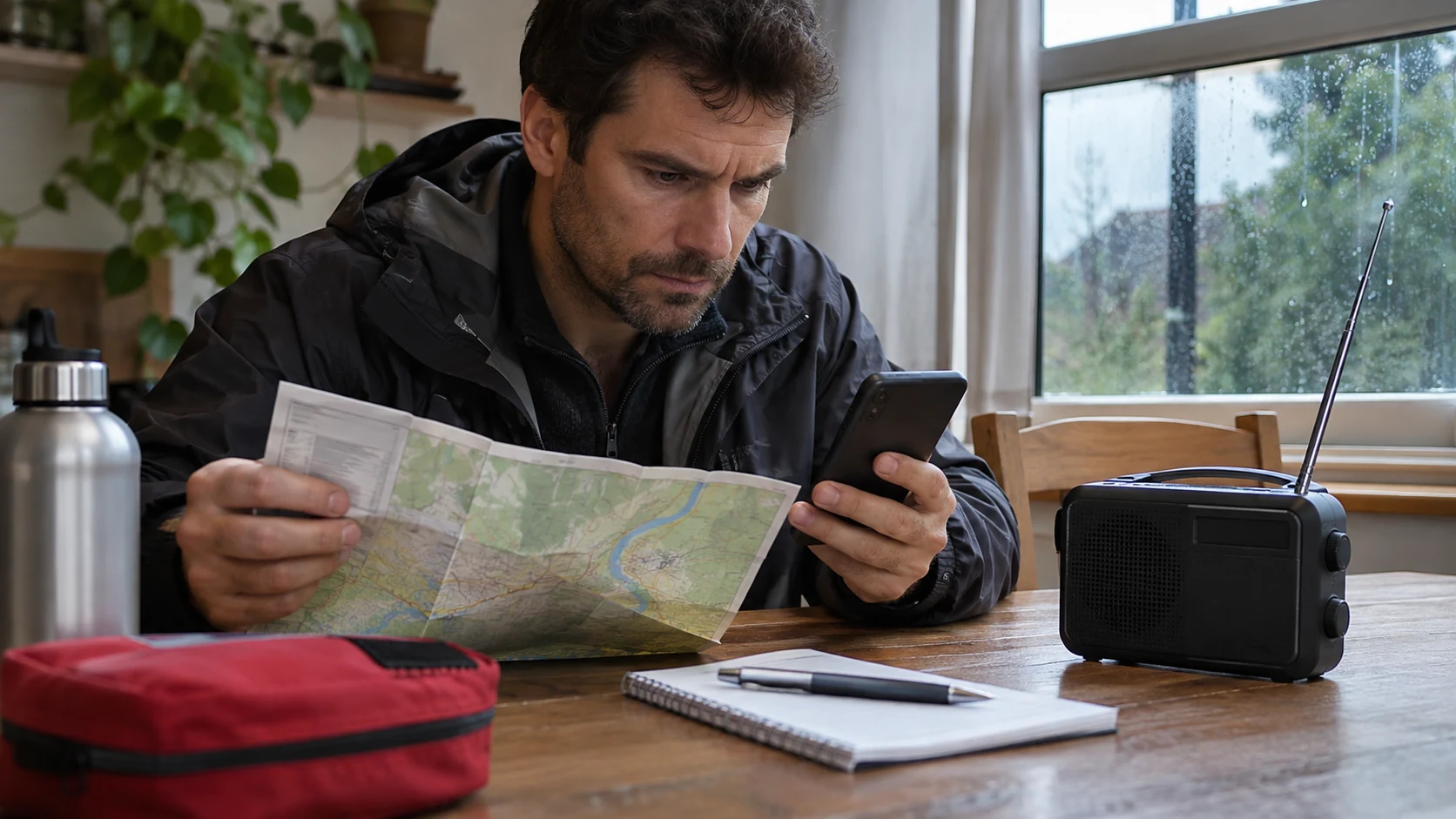
Telephone, radio and locally displayed information can complement each other. Test the device, its reception and its batteries. A current radio reception does not automatically offer a channel to call the rescue and does not allow to listen to all professional networks.
Keep track of important decisions with their time and source. A notebook can be used during a breakdown or a succession between relatives. It must contain the necessary information, without becoming a public record on the privacy of others.
Communicating understandable messages
A family contact chain can provide a brief opinion: origin, sector, record and verification link. Designate a relief person and confirm receipt when a major action is requested. Complicated coded messages can create confusion; prefer clear language.
Protect sensitive exchanges with the right settings and tools. Encryption does not guarantee that a device or recipient can never disclose the content. Do not share photos of victims or medical information without proper reason and permission.
Limit the watch that exhausts
An organized consultation makes it possible to follow the evolution without continually looking at the same images. The frequency should match the urgency and expected changes. Keep the possibility of receiving an important alert, and then preserve the rest periods.
Exercise: take an old real notice and find its source, date and area of application. Then write a three-line message that distinguishes the instruction from your own comment. This practice prepares better than an accumulation of rumors.
Quebec - Communicating in an Emergency · Quebec - Identifying misinformation