
In this article
A planned trip may become unusable: closure of a road, interruption of transport, change of weather or new set-up. Preparing for an adaptive evacuation involves retaining confirmed options and reassessing the situation. It does not require you to disappear, to bypass a control, or to search for a forbidden passage.
Start with the instructions and the danger
Check the location, the time of the message, the action requested and the authority issuing it. A shelter should not be automatically replaced by an exit. Conversely, an evacuation order must be followed without waiting for all the conditions of the personal plan to be met. In the face of immediate danger, first reach a safe place and alert the rescuers.
The destination counts as much as the journey: family, confirmed accommodation or indicated reception center. Check for accessibility, transportation, animal care and health needs. A forest or isolated place is not a fallback destination by default.
Option 1: a prepared and coordinated departure
Plan a main route and a workable alternative, a suitable means of transport and out-of-area contact. Keep documents, medicines, clothing, water and communication resources accessible. Divide the tasks between adults, with a relay if the intended person is absent.
Early departure is only useful if the course and reception are safe. Check local closures and directions; don’t just leave to avoid an imaginary traffic jam. Respect the perimeters and leave the access to the rescue.
Option 2: change of route or means of transport
If a road is closed, do not try to cross it. Use an authorized route or wait in a safe place for replacement instructions. Walking is not always an option: distance, cold, heat, mobility, smoke and air quality can make this choice dangerous.
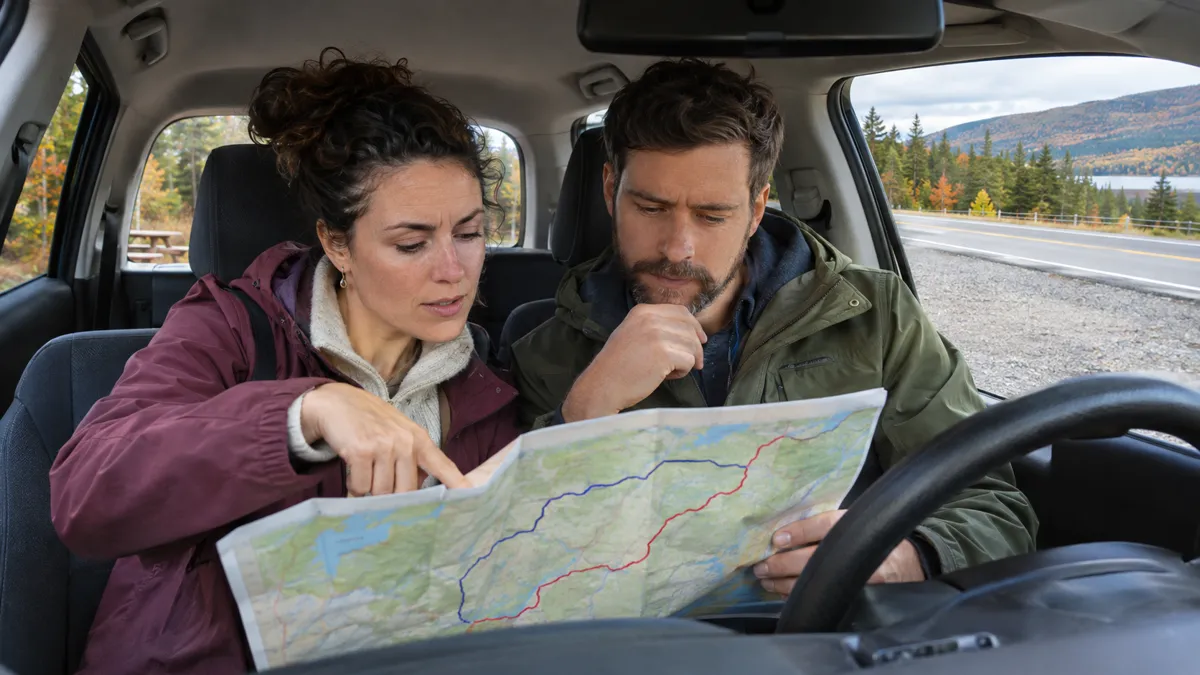
An offline or paper map completes the connected tools. It does not necessarily show recent closures. Confirm the important points with the information of the authorities and the carrier. Don’t blindly follow an app that offers a shortcut.
Option 3: Interrupt travel and ask for help
When information is lacking or a person’s ability is diminishing, reaching a safe reception may be better to pursue. Identify staff, an information point or emergency services as needed. Explain where you are, how many people are affected and the concrete constraints.
If you fear a targeted threat or harassment, seek help and a safe place. Confidentiality of travel can be useful to the public, but relatives in charge of your follow-up and rescue must have the necessary information. Crowds do not guarantee anonymity or security.
Know when to review the plan
- New official instructions or change of danger zone.
- Closure of a journey or absence of planned transport.
- Destination that can no longer receive you.
- Medical need, fatigue, temperature or other group stress.
- Loss of communication with the follow-up contact.
A police presence or control is not in itself a signal to be bypassed. Follow the directions given. If you are unable to follow the required measurement, report your needs rather than improvise a maneuver.
A simple exercise before the emergency
Choose a usual trip. Check two allowed options, a host destination and a contact. Try the ride in ordinary conditions and note the limits: stairs, schedules, distance, accessibility, fuel or load. Review the plan with the people involved.
Useful discretion protects personal information; it does not replace coordination. An adaptable plan remains understandable for loved ones, companions and rescue.
To prepare the two options
Consult also Tips for Staying or Evacuating and Assessment of the needs of the householdPrepare for home support and departure, without assuming that a single scenario will cover all emergencies.