
In this article
A security incident at sea requires an appropriate response to the ship, the area and professional procedures. For a passenger or a person without a specialized role, the priority is to follow the instructions of the crew and not to improvise a confrontation or abandonment of the vessel.
Before departure: know the context of the trip
Consult the travel advice and operator information. The risk varies depending on the route and the time; a list of old areas is not enough to decide on a crossing. A professional mission requires the application of the procedures of the employer and the operator.
Check documents, treatments and accessibility needs. Inform the crew of the necessary aids by the modalities provided. A useful object must remain compatible with the rules of transport and not clutter the movements.
Listen to the safety briefing
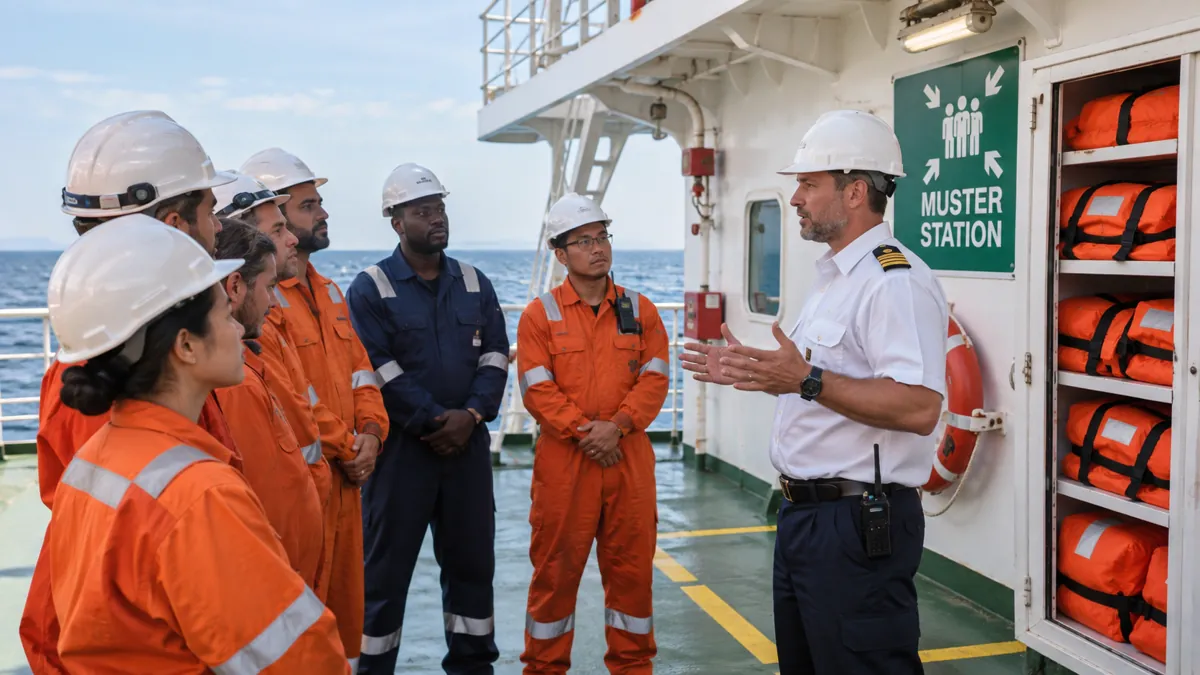
Locate your assembly station and understand how to get a deposit. Do not choose a lockable room as a refuge on your own. A safe space or citadel is a professional plan, when there is one.
Ask how assistance is organized for children, people with reduced mobility or communication needs. Don’t assume that a door or path will remain accessible in all situations.
At the beginning of an unusual situation
Report a fact to staff without approaching to observe or film. Follow the instructions and keep traffic free. A nearby ship or unusual movement does not allow a passenger to conclude an attack alone.
Avoid spreading rumours, positions or movements that could complicate the management of the incident. Brief communication with staff is different from a public call for uncoordinated collective action.
Get sheltered according to the plan of the boat
Go to the location indicated by the crew. Do not disperse to look for loved ones in forbidden spaces; inform those responsible of a missing person. The terms may differ from one building to another.
Do not move equipment, block doors or handle safety equipment without instructions. An action that appears to protect a group can prevent another intervention or condemn an outcome.
Communication and professional reporting
Radio facilities, reporting centres and security procedures require appropriate knowledge. If you have a function on board, apply the planned training and plan. A general public guide does not replace these procedures.
As a passenger, convey to those in charge the place, the observed fact and the need for help. Do not use a reserved channel or equipment that you do not know how to use. Do not promise relatives an unconfirmed resolution time.
Gathering does not mean giving up
A call to the gathering is not an invitation to launch a boat. The departure of the ship requires coordination and specific instructions. Lifejackets and life-saving devices are used according to the crew’s instructions.
Do not jump into the water to escape a supposed threat and do not launch a raft on your own initiative. Conditions at sea can create additional danger and make location more difficult.
After the incident
Report injuries, missing people and care needs. Follow the methods of counting and grouping. A return to normal instruction must come from those responsible; do not leave a shelter simply because the noise has stopped.
If a testimony is requested, describe what you found by distinguishing the information reported. Protect the documents and privacy of others. Psychosocial support may be requested without any obligation to publicly report on the experience.