
In this article
The last week devoted to tools: after the basic sets and their maintenance, you check which tasks would still be possible without electricity, and which should be left to a professional. The goal is not to buy construction equipment, but to link each tool to a real need and a skill you have mastered.
At a glance
- One tool, one task, one skill: get rid of anything without an identified use.
- Electrical, gas, roofing, damaged trees and weakened structures are jobs for a professional, especially after a disaster.
- Organize consumables, note tradespeople's contact details and consider lending tools among neighbours.
This week follows the weeks on choosing useful tools and maintaining hand tools.
Reviewing priority tasks
Walk through your home and equipment: what would you need to tighten, measure, cut or repair simply if services were disrupted? For each task, check the tool, accessory, consumable and protection needed.
| Task | Hand tool | What to check |
|---|---|---|
| Tightening, taking apart | Screwdrivers, wrenches, socket set | Sizes that fit the fasteners in your home |
| Measuring, marking | Tape measure, level, pencil | Stored in the same place |
| Cutting a piece of wood or a fallen branch | Hand saw | Blade, guard, clear workspace |
| Light fastening, tying | Rope, ties, heavy-duty tape | Load limits, intended use |
| Temporarily covering a damaged window or roof | Tarp, staple gun, tape | Never by climbing onto a slippery or unstable roof |
A socket or wrench set is useful if you know the fasteners involved and the right procedures. Owning the tool does not give you the skill to work on a vehicle, an installation or a structure.
Separating home maintenance from specialized work
Welding, electrical work, gas, damaged trees, roofing and weakened structures require a professional or supervision. After a disaster, a building can hide invisible dangers: do not go in or start any repair before the necessary assessments and authorizations. Report downed power lines to Hydro-Québec and keep your distance.
A chainsaw or bolt cutter is not a universal emergency accessory: using one must be mastered, authorized and suited to the risk. A tool is never used to force entry or to replace emergency services. And a fuel-powered tool is never used indoors, because of carbon monoxide.
Preparing useful manual solutions
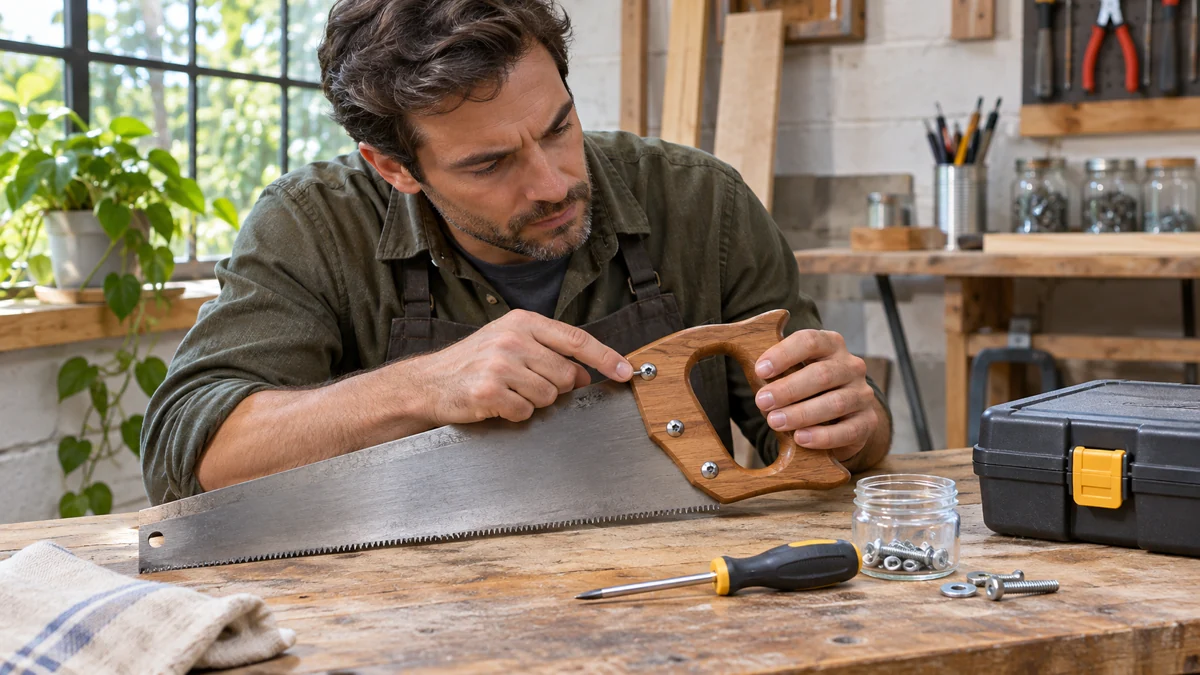
A hand saw can round out your equipment for a specific task, such as clearing a branch that fell on your property. Check the blade, fastening, guards and workspace, and learn the technique in normal conditions, not in the middle of a storm.
A sharpening accessory only works with compatible tools. It is not essential if you can have maintenance done by a professional or if the tool does not need it.
Organizing consumables
Small parts: screws, nuts, nails and blades in labelled containers, out of children's reach.
Chemicals: kept away from food, in their original containers.
Lubricants and adhesives: chosen according to the instructions; an all-purpose product does not suit every material or food equipment.
Rope: useful for light fastening, within its limits. Ordinary rope is never used for fall protection or to lift a person.
Lining up outside help
Write down the contact details of trusted tradespeople (electrician, plumber, roofer) and neighbours who can help with simple tasks. Before buying equipment you will rarely use, see whether you can borrow or rent it. A shared solution, such as a neighbourhood tool library, works when responsibilities, maintenance and access are clear. Our article on the community resilience network offers ideas for organizing one.
This week's actions
Match each tool to an authorized task.
Check condition, accessories and guards.
Identify the jobs that belong to a professional.
Try a simple task, then clean and put away the equipment.
Organize parts and useful contacts.
Expected result: a coherent set of tools and clear limits so you can make repairs without making things more dangerous.
Frequently asked questions
Do I need a generator to use tools during an outage?
Not necessarily: most small repairs can be done with hand tools. If you use a generator, always set it up outdoors, away from doors and windows, because of carbon monoxide.
Is a chainsaw an essential preparedness tool?
No. It is dangerous without training and protective equipment, and a tree that has fallen on power lines or a building is a job for professionals. A hand saw is enough for small branches.
How can I avoid piling up useless tools?
Start from tasks, not from the catalogue: only buy a tool for a task you know how to do and that will come up again. For everything else, borrow, rent or hire a professional.
Put this reading into practice
Perform the action as you wish and then check the result. Your follow-up remains specific to this route.
52 weeks to strengthen your preparation; Week 48
Maintaining tools and consumables
Your action: Check the condition of the tools, batteries and instructions, then arrange the necessary maintenance or replacement.
To check: Defective objects are identified; technical interventions remain qualified.
To do