
In this article
This week, look at what happens when reserves fall. An extended plan combines consumption, replenishment, skills and the possibility of changing location. No stock indefinitely replaces the services and exchanges on which the home depends.
Define the decision thresholds
Take back the inventory and the real needs. From what level of water, food or treatment will you need to ask for help, restock or reach another place? Decide before you run out of time and check who to contact.
The duration of a product depends on its nature, packaging and conditions. Avoid the idea of “lifetime” foods that would remain safe without follow-up. Inspect and renew stocks according to reliable indications.
Diversify meals without multiplying constraints
Combine regular foods with a few options that are easier to prepare. A freeze-dried meal can be useful in a specific context, but requires water and sometimes heat. Check servings, ingredients, allergens, sodium and storage of the product received.
Do not automatically schedule a digestive medication to compensate for an inadequate diet. Choose meals as needed and seek advice for health difficulties. A food stock should not impose a poorly tolerated diet.
Preparing an Authorized Water Supply
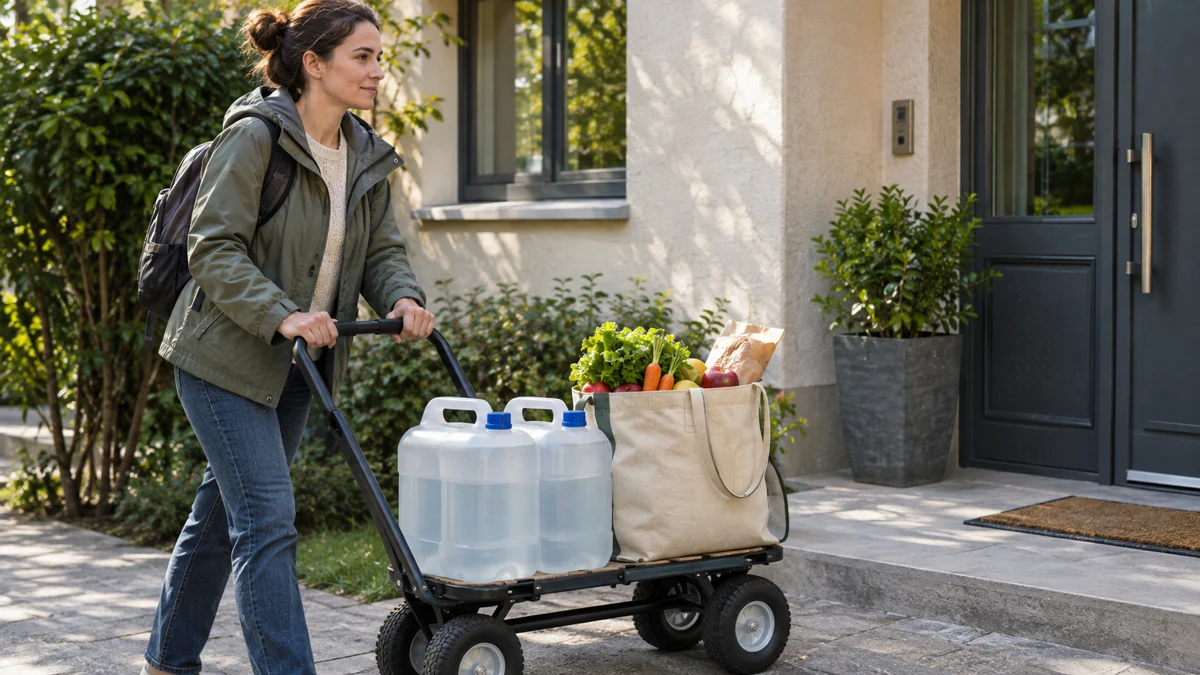
Locate local delivery points, means of transport and suitable containers. Rain harvesting can be used for certain purposes according to the rules and the installation; it does not automatically provide drinking water.
A filter must match the identified risk and be maintained. Check its parts, its real capacity and its limits. Chemical contamination is not treated as a microbiological risk.
Do not improvise a dosage of pool products or a concentrated disinfectant. Water tablets follow their own instructions only and do not respond to all contaminations.
Developing a realistic production
A garden requires water, soil, season, work and loss management. Stored seeds and fertilizers do not guarantee a harvest. Start with adapted cultures and real learning, then keep the results with a validated method.
Medicinal plants are not a substitute for prescribed treatments. For a well, a catchment or a permanent system, check the permits, water quality and maintenance needs with the relevant professionals.
Keeping a fallback solution
Persistent difficulty can make home support unsuitable. Prepare transportation, reception, medicines and special needs. An evacuation or request for help made on time is a preparation measure, not a failure of autonomy.
Actions of the week
- Write the thresholds for replenishment and withdrawal.
- Check food portions and conditions.
- Confirm an authorized source of water and its transport.
- Maintain appropriate treatments without improvised recipes.
- Test a skill and confirm the replacement reception.
Your expected result: A planned continuity beyond the reserve, with decisions made before the break.
Useful reference
Drinking water contamination or shortage - Gouvernement du Québec.
Put this reading into practice
Perform the action as you wish and then check the result. Your follow-up remains specific to this route.
52 weeks to strengthen your preparation; Week 45
Review the continuity of water and food
Your action: Resume your restocking dependencies and the possibilities of help, delivery or reception if the interruption lasts.
To check: The solutions are realistic and consensual; the financial and material limits remain visible.
To do