
In this article
- 1) Keep a “relaxed and alert” vigilance (awareness of the situation)
- 2) Adapt your travels and protect your personal belongings
- 3) Take discomfort seriously without concluding too quickly
- 4) Control the narrative (OPSEC meets PERSEC)
- 5) Knowing when to disengage: de-escalation and safe options
- 6) Reduce distractions and preserve mobility
- Optional equipment examples
PERSEC (Personal Security) is not just for people exposed to “hostile” contexts: it’s a useful approach for anyone who wants to move with more confidence, reduce risk, and stay one step ahead of everyday opportunistic threats.
Personal safety is about controlling what people know about you and how that information might be used against you.
Purpose of this guide: Improve your situational awareness, discretion and ability to break contact, with concrete and accessible habits. The goal is not confrontation, but The Avoidance, the De-escalation and the Reduction of vulnerability.
1) Keep a “relaxed and alert” vigilance (awareness of the situation)
The first rule of personal safety is simple: Know what is happening around you. Many people go through the day distracted (screen, headphones, thoughts). Without falling into paranoia, practice observing: exits, density, unusual behaviors, distances, blind spots. Adopt a “relaxed and alert” mindset. Like driving: you don’t expect an accident every moment, but you still keep an eye on your mirrors. This habit gives you time to anticipate rather than react.
Define a “baseline” and identify anomalies
First identify exits, obstacles and concrete changes: alarm, smoke, sudden movement or explicit threat. A person who waits, an unusual outfit or appearance does not prove a dangerous intention. Observable facts should guide action, without profiling.
Use rule 9-12-3
Think of your environment as a clock. From time to time, swipe your “9h”, “12h” and “3h” (in front and on the sides). This micro-ritual reduces blind spots and maintains a global vision.
Practice the “two-step rule”
As soon as a detail holds you back or worries you, mentally plan two simple actions: increase the distance (change sidewalk, speed up, slow down, enter a business) and choose a safe option (lighted area, busy area, on-site staff). Anticipation creates options and saves you precious seconds.
2) Adapt your travels and protect your personal belongings
The choice of clothes and equipment depends on comfort, activity and location. Protecting personal belongings and limiting their exposure can be helpful, without seeking to infer the risk of a person’s appearance.
Adapting to local standards
Observe the dress and codes of the area (business district, public transport, tourist area). The objective is to Reduce the signals that make you stand out, and avoid looking lost or disoriented.
Adopting a neutral body language
Adopt a look that is compatible with your comfort and abilities. A tired, disoriented or disabled person is not responsible for an assault; no posture guarantees safety.
Keep the accessories subtle
Keep your belongings within reach and handle valuables in a place where you can stay mindful of your surroundings. Adapt these habits to your abilities and the situation.
3) Take discomfort seriously without concluding too quickly
A discomfort may justify taking a distance or asking for help. It does not mean that a person is targeting you. Check the facts available and choose a proportionate action, without confrontation.
Simple Exercises of Attention
You can find an exit, a reception point and a way to call. This exercise can make the options more familiar, without guaranteeing a person’s reaction under stress.
Mini-scenarios “What if?”
Keep these checks brief and context-appropriate. If they become invasive or increase anxiety, reduce them and seek support as needed.
Recognising patterns... and their ruptures
Environments have patterns. If someone consistently aligns with your pace, changes direction when you change, or reduces the distance for no reason, it’s a signal. When in doubt: increase the space, change axis, and join a busy area. Personal Safety Measures in the Urban Environment (PERSEC)
4) Control the narrative (OPSEC meets PERSEC)
PERSEC (privacy) and OPSEC (protection of sensitive information) come together on a principle: Control what others know about youVulnerabilities often arise from “innocent” details (habits, schedules, journeys, periods of absence, frequent places).
Limiting exposure on social media
Avoid real-time posts about your location or travel. If you want to share, post after the fact and adjust your privacy settings. It’s not “being paranoid”: it’s reducing an exposure area.
Staying vague about habits
You are not required to communicate your schedules or habits to someone who does not need to know them. In case of insistence, end the exchange or ask for help.
Managing Information in the Entourage
Your loved ones can unwittingly disclose sensitive details. A simple reminder (especially for online publications) greatly improves collective security.
5) Knowing when to disengage: de-escalation and safe options
Sometimes the best decision is to walk away early. If you feel followed, rushed or uncomfortable, avoid confrontation: increase the distance, change routes, enter a public place, and choose an environment where you are not isolated.
Using crowds and public spaces
Shopping mall, coffee shop, hotel lobby, reception, illuminated place: these are “security multipliers”. You save time, visibility, and access to help.
Taking advantage of barriers and terrain
Doors, stairs, physical separations, sidewalks, parked cars: anything that slows down an approach gives you air. The goal is not perfection, but time.
Creating a Simple Breakup
Without dramatizing, you can “break” a situation by entering a building and exiting through another exit, getting closer to a group, or placing yourself near a counter/staff. The key is to act early.
6) Reduce distractions and preserve mobility
Reducing distractions and maintaining access to communication can make it easier to get around. The responsibility for violence lies with the perpetrator; a person’s appearance or gait does not predict risk.
Avoid distractions
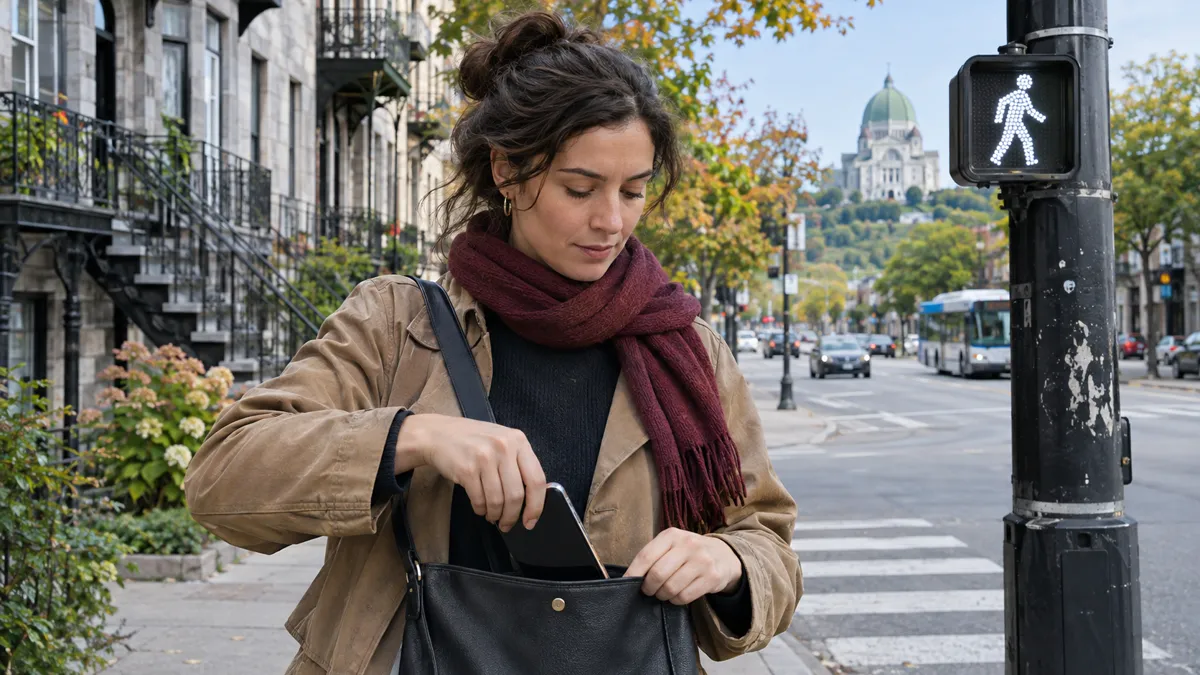
Keep messages in a safe place. Walking “in the screen” is a very visible vulnerability marker.
Keep your hands free
Too many bags, suitcases, items in your hand: you lose mobility and options. If possible, distribute and simplify.
Healing the Posture
A comfortable posture and a transportable load can help with mobility. Adapt your choices to real needs, without seeking to play a role of force or domination.
In summary: PERSEC is not about living in fear, but about Controlling their space and Minimize the risksStaying alert, adapting, controlling information, and breaking contact early are simple habits that change everything.
Two items for putting these ideas into practice
Use flame-free lighting and keep a phone usable during a service interruption.
Affiliate links: as an Amazon Associate, PrépaCivile earns from qualifying purchases. These examples are optional. Check the model, package contents and terms. Use equipment you already own first.
Headlamp for hands-free lighting
Check required batteries and storage; supervise children using the light.
Canada — Amazon.ca
 BLACK DIAMOND Spot 400 Lampe frontale | Luminosité de 400 lumens | Intensité variable | Étanche et durable | Fonctionne avec 3 piles AAA (incluses) | GraphiteView on Amazon.ca
 Black Diamond Unisex Spot 400 Lampe Frontale Graphites One Size
Power bank for a compatible phone
Check connectors and cable. This is not backup power for a medical device.
 Anker Chargeur portable USB-C 10 000 mAh 30 W
 Anker Zolo Batterie externe 10000 mAh 30 W avec câble USB-C
