
In this article
The metalized barrier bags and vacuuming meet different uses. The right choice depends on the food, its humidity, the envisaged duration and the storage conditions. Reducing oxygen does not sterilize a food and does not transform a perishable product into a reserve to be stored at room temperature.
Understand what the packaging protects
Light, moisture, oxygen, insects and mechanical damage can alter a reserve. Packaging acts on some of these factors. It must be compatible with food contact and properly closed.
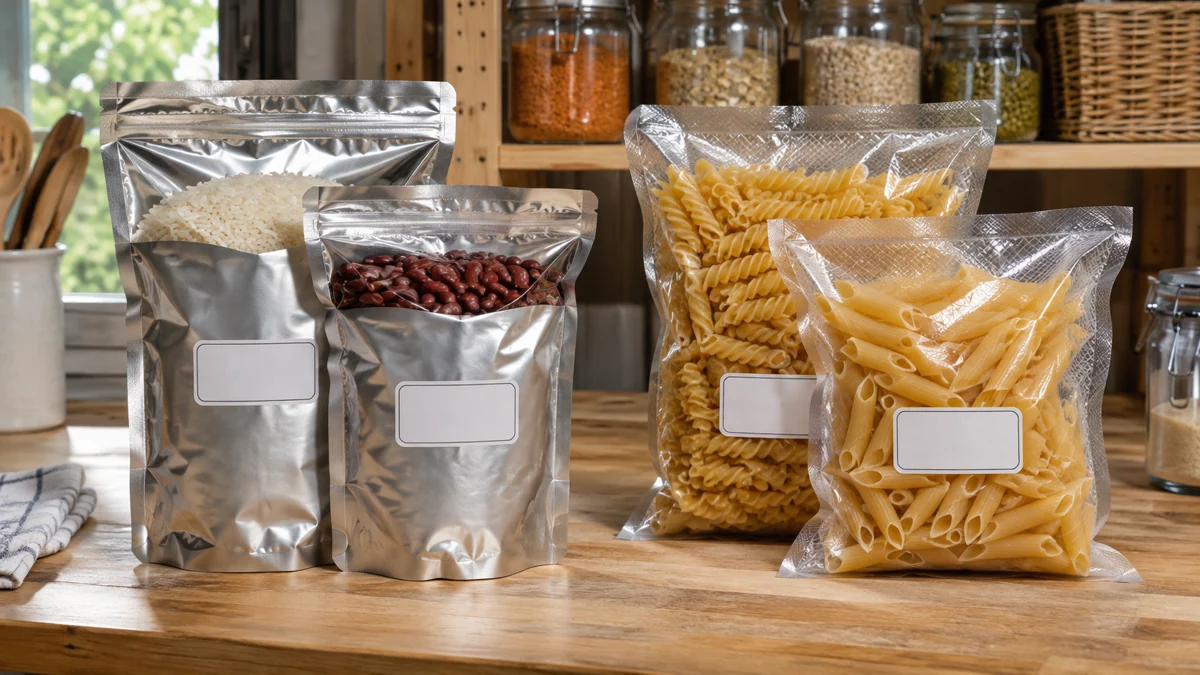
Metallic bags often called “Mylar” are assemblies whose performance varies with the composition, thickness and welds. The trade name alone does not guarantee a perfect barrier. Vacuum packaging also uses variable materials and processes: check those intended for your device and your use.
Reserve the absorbers for appropriate uses
Oxygen absorbers can be useful for certain foods that are dry enough in a suitable package. The quantity, conditions of bagging and closure must follow validated recommendations. A visual estimate does not properly measure the humidity of a product.
Do not transfer this method to a wet preparation or foods that depend on the cold for safety. The absence of oxygen can lead to microbiological hazards in unsuitable conditions. The absorber is not a universal preservative and does not correct poor drying.
Choose known foods and a documented method rather than a general promise of preservation for several decades. The initial quality, temperature and condition of the packaging always count.
Use the vacuum for a defined function
Vacuuming can help organize portions and limit certain alterations, especially in the freezer with suitable sachets. It does not exempt the respect of the cold chain. Perishable foods remain subject to the appropriate storage precautions.
Check that the welds are clean and continuous. Residues or excessive moisture at the closure can compromise it. Date the portions and indicate the conditions to be respected for the people who will use them.
Vacuuming accessories for jars do not replace a canning treatment. A lid held by the vacuum does not attest that a wet preparation has become safe to keep on a shelf.
Compare methods according to usage
| Intended use | Point to check | Essential limit |
|---|---|---|
| Reserve of dry food | Material, humidity, welding and validated recommendation | No universal duration guaranteed |
| Portions in the freezer | Compatible bag and storage temperature | The vacuum does not replace the cold |
| Open product often | Portioning, closing and rotation | Each opening changes the conditions |
| Wet House Preparation | Validated conservation process | Neither absorber nor simple vacuum sterilizes |
Protect the bags and keep a rotation
A sachet can be pierced, crushed or attacked by rodents. A suitable outer container materially protects the reserve, without rendering its contents sterile. Place food in a clean, dry place, away from high temperature variations and chemicals.
Organize portions corresponding to the meals of the household. A large amount open for small use can complicate the rotation. Keep a simple inventory and use food regularly to verify that it is actually suitable for cooking habits and methods.
Recognize situations that require a different method
High-fat foods can degrade differently than low-fat cereals. Dried fruits, homemade preparations and products sold as “dry” do not necessarily have the same characteristics. Consult a specific reference rather than applying a single rule.
When in doubt about the safety of a food or preparation, do not taste it to decide. The absence of visible odor or defect does not prove the absence of danger. Resume a reliable method with suitable food and packaging.
Your next action: Choose a food and realistic rotation time, then document the storage method. Do a little test before conditioning a large reserve.