
In this article
Knowing your neighborhood helps to reach a reception, bypass a closed street and find help without relying entirely on a phone. This preparation focuses on places, access and services. It is based on ordinary observations and respects the privacy of the inhabitants.
Build a map useful for travel
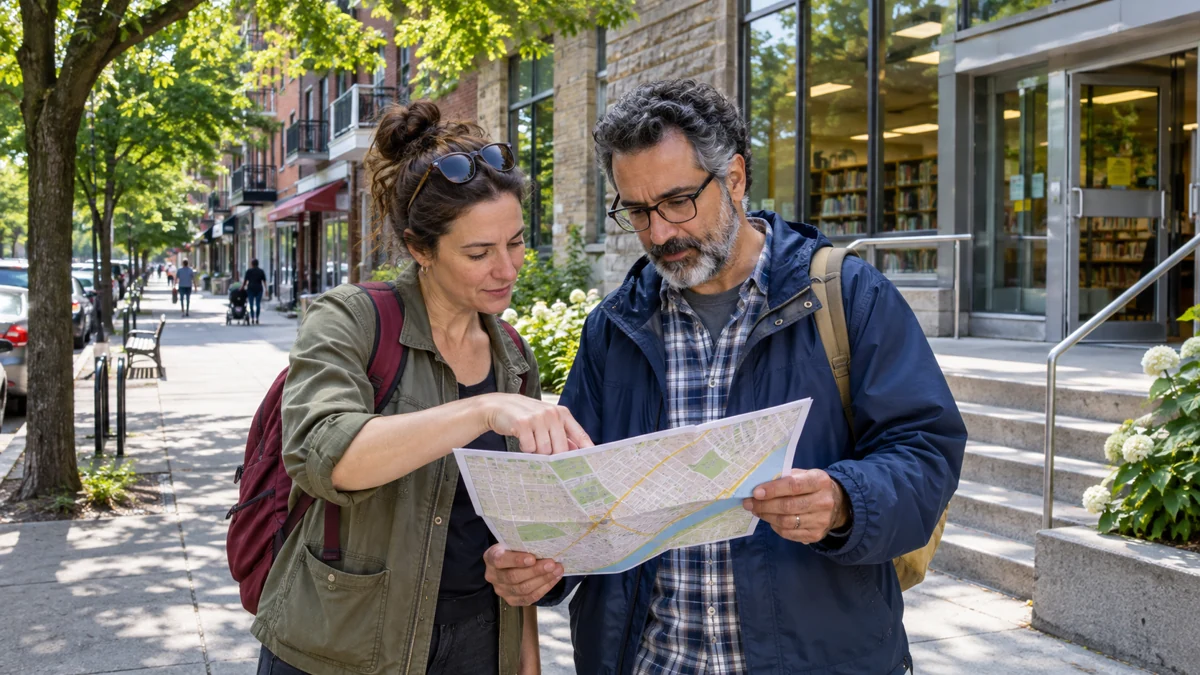
On a paper plan or a printed copy, identify the home, the places frequented, the transport stops and the establishments where assistance can be requested. Check their schedules and accessibility: a known building can be closed in the evening, reserved for its users or inaccessible by the usual entrance.
Prepare two realistic routes to a destination. One may be suitable for a car, the other for a trip on foot or by public transport. Examine sidewalks, stairs, slopes and crossings with the people involved. An impassable shortcut with a stroller or mobility aid is not an alternative.
A moisture-resistant notebook can keep the addresses and changes spotted. Above all, the information must remain legible, dated and available to the members of the household who need it.
Identifying material constraints
Bridges, tunnels, railways and busy roads can limit options. Note the authorized detours, without assuming that a secondary lane will remain open during a disaster. Traffic instructions, barriers and security perimeters take precedence over the plan prepared in advance.
Consult the municipality’s information regarding local risks: flooding, major works, heat or other known constraints. A temporary reception area is not necessarily open at all times. Check the announcements at the time of the event.
A walk of recognition during the day allows to examine these points without endangering. Avoid underground networks, roofs and private properties. Do not turn this exercise into a search for hidden passages.
Preparing places for waiting and appointments
Agree on a close rallying point and a second one outside the usual area. Choose easy to describe landmarks and an alternative if the place is closed or inaccessible. Children should know which adult or reception desk to go to if they are separated from the group.
For each destination, write down a complete address, a verified number and the name of an expected person if the reception is private. A prior agreement avoids arriving in a place whose occupants are absent or cannot accommodate the home.
Improve visibility and access to the home
Check the lighting of the entrances, the state of the steps and the legibility of the civic number. Report any deficiencies in the public space to the manager or municipality. Keep accesses and exits clear, especially after a snowfall.
A small lamp is used to read an address, find a key or walk in a dark staircase. Choose a simple grip and power supply that you can maintain; it complements the lighting of the premises without replacing it.
Relying on a respectful neighbourhood
Voluntarily exchange some contact information and offer specific help: check a person during a breakdown, transmit municipal information or help carry a bag. Ask for the agreement of the interested parties and avoid making detailed lists about their habits or health.
An unknown face, a nervous person or a parked car do not prove malicious intent. If a concrete danger appears, move away and report observable facts. Residents should not investigate their neighbors or broadcast charges in a focus group.
Put the plan to the test
Make a trip with the most constrained person in the home, at an ordinary hour. Check the time required, the possibilities of rest and the load actually transported. Resume the test after a major change: moving, work, evolution of mobility or new destination.
Your next action: prepare a map with two destinations, their coordinates and two authorized routes. Store a copy with the departure documents and explain it to the people concerned.