
In this article
An emergency binder is used to retrieve the necessary information when a person used to managing the household is absent or a departure must be arranged. Its value depends on its simplicity, topicality and protection. He must facilitate the action without needlessly gathering all the secrets of the family into a single object that is easy to lose.
Prepare two levels of information
A quickly accessible form can contain priority contacts, practical needs and the location of documents. Sensitive copies require separate storage, with limited access to authorized persons. This separation makes it possible to transmit an instruction without revealing a complete file.
Ask concerned adults what information can be shared and with whom. For children or accompanied persons, respect the applicable responsibilities and authorizations. A number that is useful for transportation does not require you to share a medical history.
Organize easy to find sections
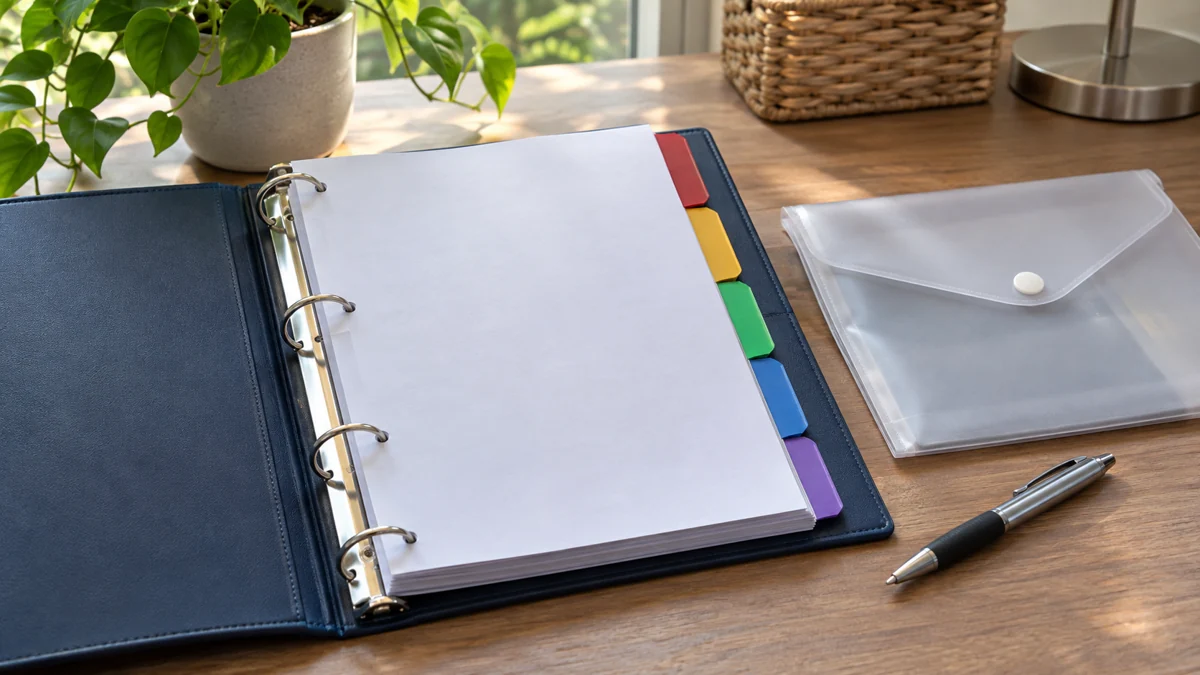
The headings may cover contacts, household members, treatment, insurance, housing, essential services, animals and the departure plan. Add a table of contents and a revision date.
For accounts and contracts, note the necessary references and official ways to reach the organization. Avoid systematic double-sided copies of bank cards or the accumulation of identity numbers that are not useful in emergencies. The document must remain proportionate to its use.
| Heading | Priority information | Protection to be provided |
|---|---|---|
| Contacts | Close, welcome, helpful services | Agreement of persons and verified numbers |
| Health | Treatments, allergies, professionals | Limited access as required |
| Housing and insurance | Contracts, references, useful inventory | Protected copies, originals in a safe place |
| Departure | Destination, instructions, personal needs | Transportable and up to date version |
Make documents transportable
Prepare a pouch containing only the useful copies at the start. Check the format, weight and legibility. The necessary originals must be identified and kept in a safe place, without being exposed by default in a daily bag.
A water or fire resistant box can improve certain storage conditions, but its performance depends on testing and precise limits. Read the features of the model; don’t assume it will protect all supports during any fire or long immersion.
Protecting the digital version
Choose secure storage, with backups and appropriate access. Passwords should not be entered in plain text in a binder that can be taken or photographed. An emergency access procedure must be adapted to the service employed and known to authorized persons.
Verify that the backup copy is actually readable on an available device. An encrypted file that no one can find access to or incompatible media does not fulfill its role. Try it without passing the data to an unknown service.
Download the original PDF
The PDFs below are provided in their original format, without modification or recreation. Download them to organize household information, then keep completed copies offline and restrict access to the people concerned. Protect personal data and verify that contact details and administrative steps still match your circumstances before using the documents.
- Download the original Emergency Workbook - PDFOriginal PDF · source language preserved
- Download the original checklist - version 2020, PDFOriginal PDF · source language preserved
- Download the original checklist - version 2022, PDFOriginal PDF · source language preserved
These historical documents retain their original presentation and content. Check the news before use. They do not replace the legal or administrative procedures specific to your situation.
Test and then keep up to date
Ask an authorized person to find a contact or reference without your help. Note what’s missing and simplify the ranking. Review after a change of address, treatment, insurance or family situation.
For proxies, wills, custody documents or estates, have the applicable requirements verified by the professionals concerned. A binder facilitates access to these documents; it does not give them legal validity that they do not have.
Your next action: Gather essential contacts and choose where to keep sensitive information. Do a research trial and then enter the next revision date.