
In this article
An animal may need food, medicine, a transport container and a place of care at the same time that its home has to leave. For day 20, prepare these elements together: a bag of provisions does not alone regulate transport or accommodation.
Make a card per animal
Gather a recent photo, owner and veterinarian contact information, identification, treatments, and information useful to care. Check the coordinates related to the microchip, if there is one. A recorded identification with an old phone number becomes less useful during a separation.
Indicate the characteristics necessary for the reception: food, difficulty of handling, reactions of fear or need of separation with other animals. Describe useful facts without promising that an animal will remain calm in an unusual environment.
Preparing provisions and hygiene
Allow at least three days of regular food and a water supply adapted to the species, size, temperature and health. Ask the veterinarian how to adjust this reserve if a particular treatment or condition warrants it. Keep the power identifiable and rotate.
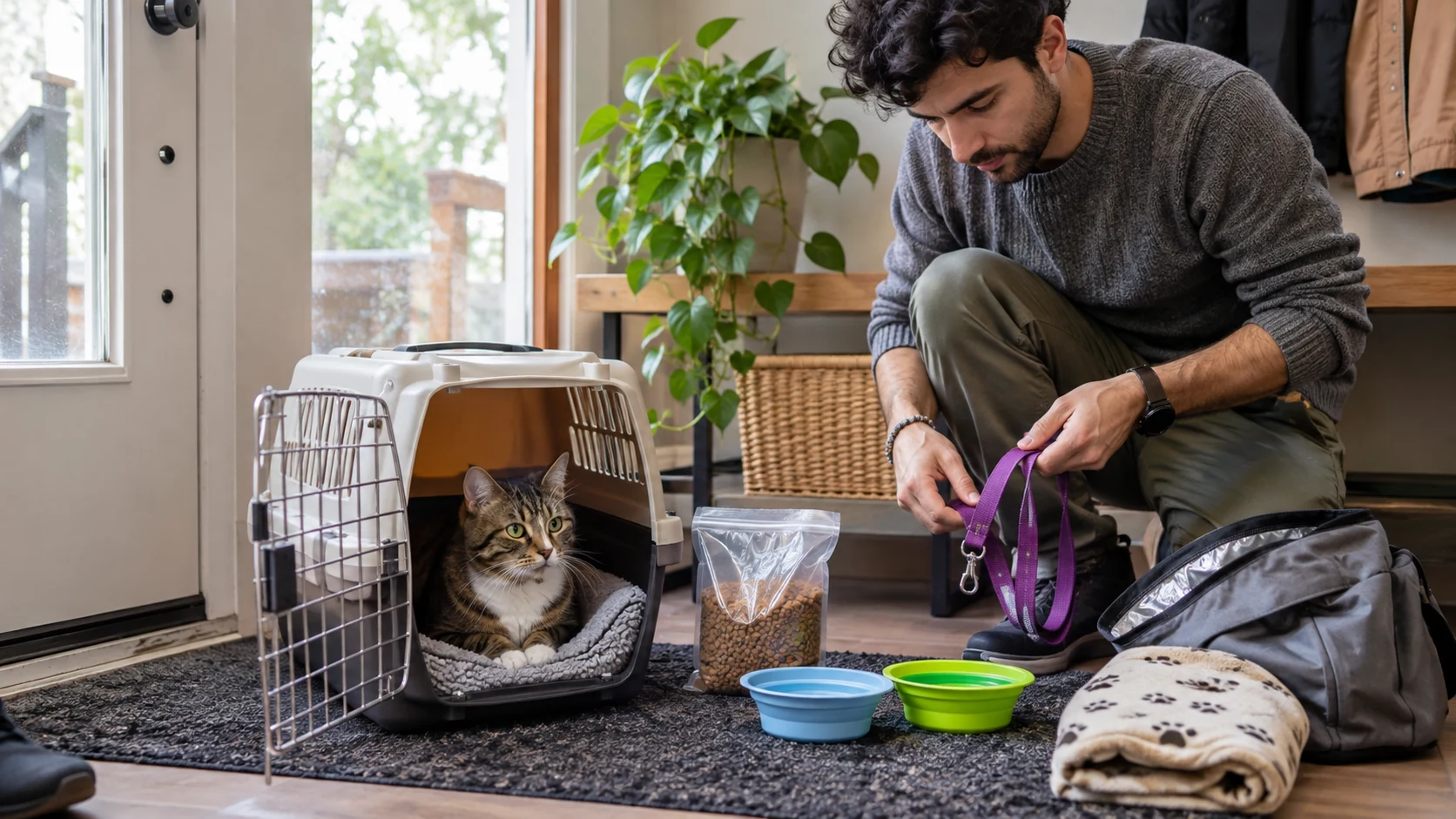
Add bowls, a suitable leash or harness, hygiene equipment, feces bags and, for a cat, a litter solution. Medicines must remain organized according to the instructions received, with the information necessary for their administration.
A familiar toy or blanket can facilitate installation at the destination. This additional comfort does not replace the conditions of transport and reception necessary for the safety of the animal.
Check transport before the emergency
Choose a crate, carrier or restraint equipment that is suitable for the animal and vehicle. Check for closures, ventilation, bulkiness and the ability to wear it. Gradually habituate the animal to enter in ordinary conditions, without waiting for an evacuation.
Do not automatically carry supplies to a dog. His age, state of health, and training change what he can handle; a sick or elderly animal may need to be transported rather than loaded.
For horses, poultry or other farm animals, the logistics are different: proper transport, handling, place of reception and availability of a competent person must be confirmed with the relevant services and professionals. A plan for a dog or cat cannot simply be expanded.
Confirm a welcome and a succession
Identify several possibilities: close, pension, establishment that accepts animals or municipal device provided for the situation. Confirm the conditions, capabilities, required documents and how to reach the location. All accommodation centres do not accommodate pets; service animals are subject to a separate framework to be checked with the organizer.
Also, consider someone who could intervene if you’re away. They need to know how to access animals, where their belongings are, and what limits to respect. Do not post your home access information in an open listing.
Repeating a simple start
Prepare the bags, install the transport containers and travel to the vehicle or pick-up point. Observe the duration, the number of hands needed and the difficulties of handling. Do not block an exit during this test.
In a real situation, leave when the instructions or your safety requires it. Do not enter a dangerous area to retrieve an animal: report its presence and location to the responders. The plan serves precisely to reduce the risk of having to improvise this decision.
Canada - Pet Preparation and Assistance
Put this reading into practice
Perform the action as you wish and then check the result. Your follow-up remains specific to this route.
31 days to better prepare; Day 20
Preparing the animals
Your action: Check the diet, prescribed treatments, identification, transport and possibility of reception of each animal.
To check: The equipment is suitable for the animal; the veterinarian’s contact details are accessible.
To do