
In this article
Plan meals, compare portion costs and use reserves before buying more.
Understand the risk and its consequences
Food prices vary by product and point of sale. A general forecast on beef does not guarantee an economy by buying before a given date. For the household, useful decisions are based on the observed unit price, the quantities consumed and the actual conservation capacity.
Meal planning and the variety of proteins make it possible to modify a menu without depending on a single food. Start with the foods already available, and then compare options taking into account losses, transportation, and budget.
Key lessons for households and communities
Lesson 1: Climate Shocks Impact Our Plate
Production, transport and demand can influence prices. For your purchases, use verifiable prices and compare equivalent products. Agricultural news alone does not predict the price of your next grocery store.
Lesson 2: Comparing Really Available Options
A change in price justifies a review of the menu and quantities. Compare the cost per usable serving, taking into account bones, losses and necessary ingredients.
Lesson 3: Seasonal planning becomes essential
Plan according to meals and available space. A purchase in quantity requires a sufficient budget, a suitable conservation and a plan to consume the portions without wasting.
Remember: a promotion is an economy only if the food is useful, properly stored and consumed. Diversifying menus and limiting waste can be more relevant than filling a freezer.
Reflexes to adopt
- Compare prices before buying : Consult several retailers (groceries, independent butchers, public markets) to identify the best rates and take advantage of weekend promotions.
- Buy in quantity only if the observed price is advantageous, if the portions will be used and if the cold chain can be preserved. No time of year automatically guarantees an economy.
- Diversifying proteins : Adding chicken, fish, eggs or legumes to the menu more often reduces beef addiction and improves food resilience.
- Consult the procurement reports : Agriculture and Agri-Food Canada publishes useful bulletins to help keep track of agricultural and climate news.
- Also compare licensed producers and local businesses, without assuming they are cheaper. Do not buy wild game meat such as moose or deer from hunters: its sale is prohibited in Quebec, subject to applicable regulatory exceptions.
Prepare now
Concrete actions:
- Inventory of the freezer : Check what you already own and identify any gaps before prices go up. Organizing your storage space optimizes future purchases.
- Establish an adaptable food budget : Provide a flexible envelope for proteins, knowing that prices fluctuate. This avoids impulsive expenses in the event of an increase.
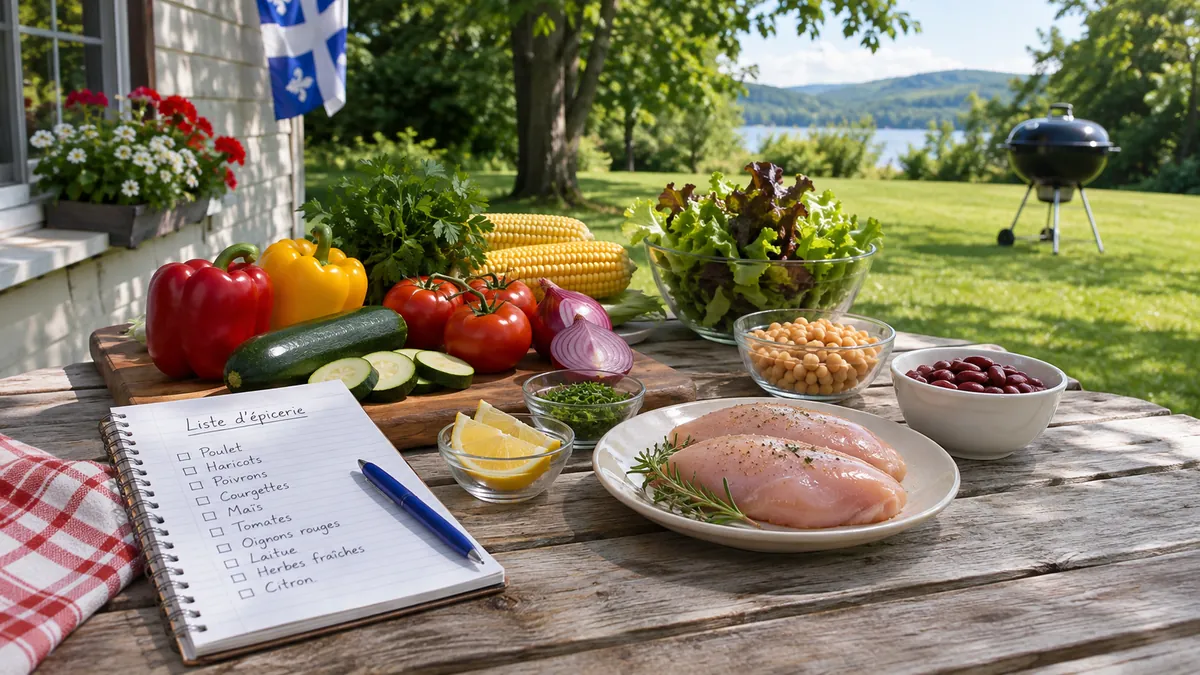
- Create a seasonal menu plan : Provide BBQ menus based on what is on sale (poultry, smoked fish, mixed kebabs) rather than exclusively on beef.
- Participate in collective purchasing groups : Some Quebec associations or cooperatives offer wholesale purchases at a reduced price. Check with your region or community.
Frequently asked questions
How long should we expect high beef prices?
The duration of an increase cannot be guaranteed here. Reevaluate your menus based on the actual prices displayed and your budget, rather than accumulating on the basis of a forecast.
Is it wise to make a massive stock now?
There is no universal quantity to buy. Take inventory, estimate consumption and conservation capacities; keep a budget margin for other needs. A diversified reserve also limits the dependence on the freezer.
Are alternatives to beef (giber, local meat) cheaper?
Compare legally traded foods by cost per serving, preparation, and storage. Legumes, tofu and eggs offer opportunities for diversification. Selling wild game meat is not a recommended supply route.
Appropriate planning is based on observed prices, useful portions and conservation. Diversify the menus according to the needs and preferences of the home, without buying to meet an unwarranted forecast.
Sources and Updates
Document verification: November 3, 2026. The official instructions in force in your area take precedence in real situations.
- Canada's Food Guide - Meal Planning
- Canada's Food Guide - Protein Foods
- Quebec - sale, purchase and possession of game
Two items for putting these ideas into practice
Organize food rotation and check that stored meals remain easy to prepare.
Affiliate links: as an Amazon Associate, PrépaCivile earns from qualifying purchases. These examples are optional. Check the model, package contents and terms. Use equipment you already own first.
Containers for organizing dry foods
Canada: 7.8-cup container; France: four-piece set. The offers differ in capacity and contents. Follow the stated food-storage uses.
Canada — Amazon.ca
 Contenant Rubbermaid, plastique sans BPA, Brilliance Pantry stockage hermétique des aliments, stock ouvert, cassonade (7,8 tasses)View on Amazon.ca
France — Amazon.fr
 Rubbermaid Brilliance Lot de 4 boîtes de conservation alimentaire sans BPA avec couvercles, hermétiques, résistantes aux taches, passent au lave-vaisselle, grisView on Amazon.fr
Manual can opener for stored meals
Try it on the cans your household uses; grip and effort must suit the user.
 OXO Good Grips Good Grips Ouvre-boîtes Noir 19 cm
 OXO Good Grips Ouvre-boîte à poignée souple